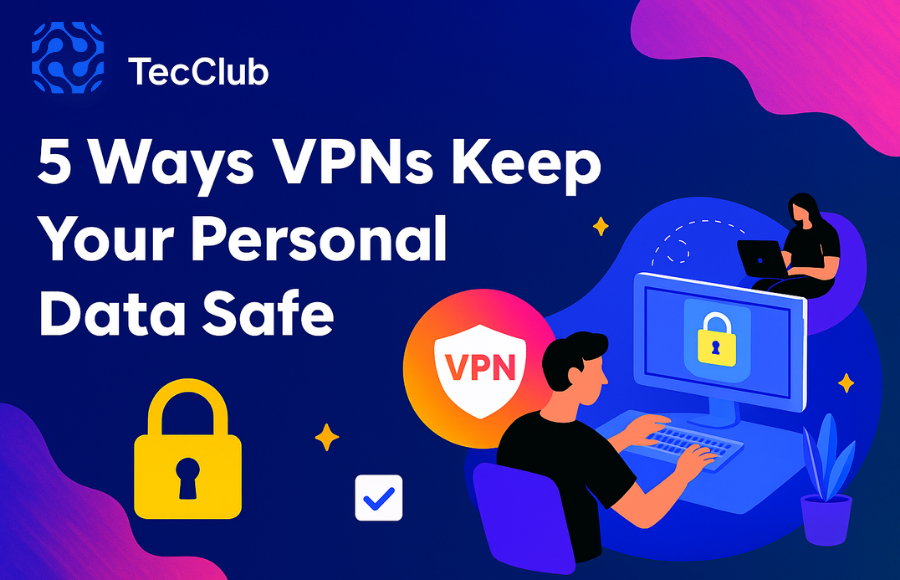
5 Ways VPNs Keep Your Personal Data Safe
Introduction
In today’s digital-first world, your personal data is more valuable than gold. From browsing habits to financial details, hackers, advertisers, and even unsecured Wi-Fi networks are constantly trying to get a piece of your information. This is where a VPN (Virtual Private Network) comes in—your digital shield against online threats.
Let’s break down the five most powerful ways VPNs keep your personal data safe.
1. Encryption That Locks Out Hackers 🔐

A VPN encrypts your internet traffic using advanced algorithms like AES-256, making it impossible for hackers to read your data—even if they intercept it. Whether you’re checking emails or making bank transactions on public Wi-Fi, encryption keeps your sensitive information secure.
2. Protects You on Public Wi-Fi ☕
Coffee shops, airports, and hotels are hotspots for cybercriminals who exploit unsecured Wi-Fi. A VPN shields your activity, ensuring your passwords, credit card numbers, and private messages can’t be stolen.
3. Hides Your IP Address 🌍
Your IP address can reveal your location, browsing patterns, and even identity. VPNs mask your real IP address with one from their secure servers, keeping your personal details safe from trackers, advertisers, and snoopers.
4. Blocks Data Tracking and Profiling 🚫
Websites, ISPs, and apps constantly track your online behavior to build detailed profiles. A VPN blocks this tracking, making it much harder for companies to collect, sell, or misuse your personal data.
5. Prevents Identity Theft 🛡️
By combining encryption, IP masking, and secure tunneling, VPNs add an extra layer of defense against cybercriminals trying to steal your identity. This means your online accounts, financial data, and personal info stay protected.
VPN Pricing Overview 💰
VPNs are surprisingly affordable considering the level of protection they provide:
| VPN Type |
Typical Price |
Best For |
| Consumer VPNs (ExpressVPN, NordVPN, Surfshark) |
$5 – $12/month |
Everyday users, streaming, and privacy |
| Family Plans |
$10 – $20/month |
Multiple devices, household protection |
| Business VPNs (NordLayer, Perimeter 81) |
$8 – $11/user/month |
Team data security, remote work |
| Free VPNs |
$0 |
Basic browsing (⚠️ often limited & less secure) |
Pro Tip: Free VPNs may compromise privacy. Paid services are far more reliable for keeping your data safe.
Conclusion
VPNs aren’t just about browsing privately—they’re about defending your personal data against hackers, trackers, and identity thieves. By encrypting your traffic, hiding your IP, and blocking data profiling, VPNs give you the freedom to explore the internet safely.
At TecClub Technology, we encourage individuals and businesses to adopt VPNs as a must-have security tool in today’s connected world.